Why Is Georgetown TX Water So Hard? | 25.8 GPG
Georgetown TX Plumber • Georgetown TX Educational Guide
Why Is Georgetown TX Water So Hard? (And What It’s Doing to Your Plumbing)
Updated August 2026 • 3803 Williams Dr, Georgetown TX 78628 • (737) 738-8111
The short answer: Georgetown’s water supply travels through the Edwards Aquifer’s Cretaceous-era limestone formations, picking up calcium and magnesium at extraordinary concentrations. By the time it reaches your tap, it measures 25.8 grains per gallon (GPG) — nearly four times the 7 GPG threshold that defines “hard water.”
Where Does Georgetown’s Hard Water Come From?
Georgetown’s municipal water comes from the Edwards Aquifer, a massive underground limestone formation stretching across Central Texas. As rainwater percolates through limestone over thousands of years, it dissolves calcium carbonate and magnesium — the minerals that define water hardness.
The City of Georgetown’s Annual Water Quality Report confirms a hardness of 440 mg/L (25.8 GPG). To put that in perspective:
7 GPG
Hard water threshold
10.5 GPG
US national average
25.8 GPG
Georgetown TX — 2.5× national average
What Hard Water Does to Your Georgetown Home
1. Kills Water Heaters Early
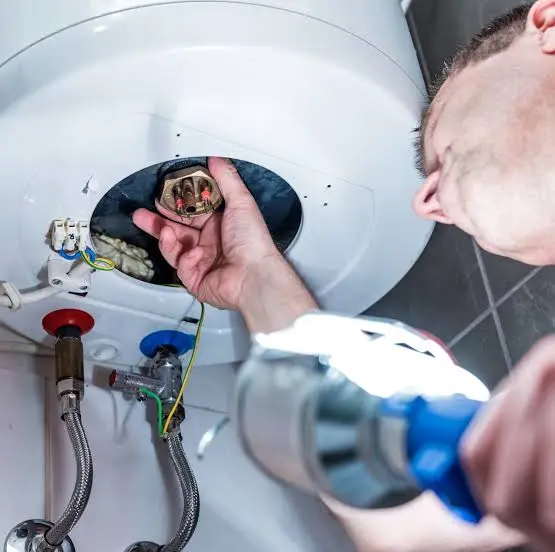
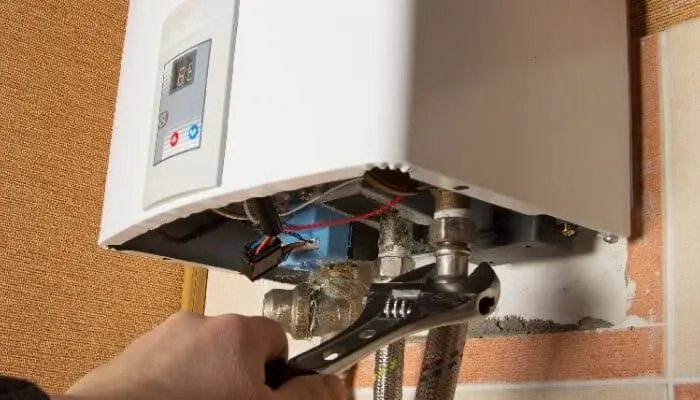
This is the biggest impact. Calcium carbonate precipitates out of hot water and settles as scale on heating elements and tank walls. In Georgetown, scale builds at roughly double the national rate. A water heater that should last 10–12 years nationally lasts 6–9 years in Georgetown. The white deposits you see in your kettle or on your showerhead are the same deposits destroying your water heater from the inside.
2. Clogs Showerheads and Faucets
Those small holes in your showerhead? They clog with calcium deposits within 18 months in Georgetown without maintenance. Flow drops 50–75% before most homeowners notice. The white crusty buildup around your faucet base is the same mineral — it’s cosmetically ugly and functionally damaging to valve seats and aerators.
3. Corrodes Copper Pipes
Georgetown’s hard water chemistry accelerates pitting corrosion in copper supply pipes. This is why Georgetown homes 15–20 years old are seeing pinhole leaks in copper lines. The Edwards Aquifer’s mineral combination creates conditions that attack copper from the inside — thinning pipe walls until they fail.
4. Increases Utility Bills
A ¼-inch scale layer on a water heater element increases energy consumption by 40%. Your dishwasher and washing machine use more electricity and detergent fighting Georgetown’s minerals. Softened water measurably reduces utility costs — most Georgetown homeowners see a return on a softener investment within 2–3 years.
5. Creates the “Rotten Egg” Smell in Hot Water
Georgetown’s hard water reacts with the standard magnesium anode rod in water heaters to produce hydrogen sulfide — the rotten egg smell that many Georgetown homeowners report from their hot water. The fix is replacing the anode rod with a zinc-aluminum type designed for high-mineral water. This is standard procedure on every water heater installation we perform in Georgetown.
How to Protect Your Georgetown Home from Hard Water
✓ Install a whole-house water softener
The most effective solution. Removes calcium and magnesium before they reach any appliance or fixture. Extends water heater life by 30–50%, eliminates scale buildup, improves soap lathering. Investment: $800–$2,500 installed in Georgetown.
✓ Annual water heater maintenance
Annual sediment flush and anode rod inspection — critical in Georgetown. Most manufacturers recommend every 2–3 years nationally. Georgetown’s water hardness makes annual service necessary.
✓ Replace standard anode rods with zinc-aluminum
Eliminates the rotten egg smell and provides better corrosion protection in Georgetown’s hard water environment. Should be done on every new and existing water heater in Georgetown.
Frequently Asked Questions
Is Georgetown TX water safe to drink despite being hard?
Yes. Hard water is not a health hazard — calcium and magnesium are essential minerals. Georgetown’s water meets all EPA health standards according to the City’s Annual Water Quality Report. The problem is purely mechanical: what hard water does to your plumbing, appliances, and fixtures over time.
Does the City of Georgetown do anything to treat the hard water?
Georgetown adds chloramine (chlorine + ammonia) to treat the water for bacterial safety, but does not soften it. Softening would require significant infrastructure investment. Hard water is a natural characteristic of the Edwards Aquifer supply and is not expected to change. Georgetown homeowners who want softened water need to install a whole-house softener.
How do I know exactly how hard my Georgetown water is?
The City of Georgetown publishes an Annual Water Quality Report with exact hardness measurements. The 2024 report confirmed 440 mg/L (25.8 GPG). You can also purchase a $10 water hardness test strip kit from any home improvement store — Georgetown water will register at the highest level on most test strips.
Need a Georgetown TX Plumber?
Same-day service, written flat-rate quote, 24/7 emergency response.
(737) 738-8111
RELATED PAGES
Water Heater Repair | Water Softener Installation | Service Area | More Georgetown Plumbing Tips